Con las orejas frías.

Love’s the boy stood on the burning deck
truing to recite «The booy stood on
the burning deck.» Love’s the son
stood stammering elocution
while the poor ship in flames went down.

Love’s the obstinate boy, the ship,
even the swimming sailors, who
would like a schoolroom platform, too,
or an excuse to stay
on deck. And love’s the burning boy.

«Casablanca» – Elisabeth Bishop

El amor es el muchacho que estaba en la ardiente cubierta
probando recitar
«el muchacho estaba en la ardiente cubierta».
El amor es el hijo que tartamudea la elocución
mientras el pobre barco en llamas se hundía.

El amor es el obstinado muchacho, el barco,
incluso los marineros nadando,
a los cuales gustaría también un estrado en un aula
o una excusa para estar en cubierta.
Y el amor es el ardiente muchacho.

«Casablanca» – Elisabeth Bishop (Norte & Sur, 2008) Traducción de Sam Abrams y Joan Margarit

«>
«Circle» – Edie Brickell & New Bohemians (Shooting Rubberbands at the Stars, 1988)
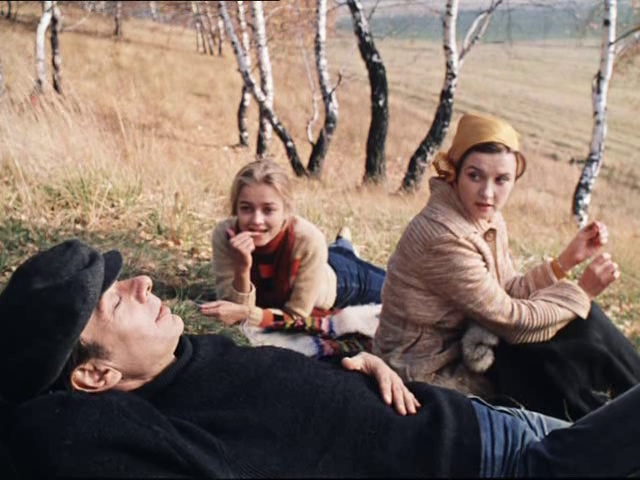
Lo que más cerca está y lo que menos se le parece.

«Moskva slezam ne verit (Moscow dosen’t believe in tears)» – Vladimir Menshov,1980

«One Art»

The art of losing isn’t hard to master;
so many things seem filled with the intent
to be lost that their loss is no disaster.

Lose something every day. Accept the fluster
of lost door keys, the hour badly spent.
The art of losing isn’t hard to master.

Then practice losing farther, losing faster:
places, and names, and where it was you meant
to travel. None of these will bring disaster.

I lost my mother’s watch. And look! my last, or
next-to-last, of three loved houses went.
The art of losing isn’t hard to master.

I lost two cities, lovely ones. And, vaster,
some realms I owned, two rivers, a continent.
I miss them, but it wasn’t a disaster.

–Even losing you (the joking voice, a gesture
I love) I shan’t have lied. It’s evident
the art of losing’s not too hard to master
though it may look like (Write it!) like disaster.

«One Art» – Elisabeth Bishop(1911 – 1979)

«>